
.png)


There are some destinations that naturally slow people down.
Sedona is one of them.
You feel it almost immediately. The towering red rock formations. The dry desert air. The way the sunlight shifts throughout the day, turning the cliffs from rust-colored to deep crimson by sunset. Even the most Slack-obsessed employee tends to pause, look up, and think, Okay… this is incredible.
That’s part of what makes Sedona such a compelling place for a corporate retreat.
Unlike destinations built around nonstop stimulation, Sedona creates something many modern teams desperately need: space. Space to think beyond the next deadline. Space to reconnect as people instead of profile pictures on Zoom. Space to step back and talk about the bigger picture.
But planning a successful retreat in Sedona takes more than booking a beautiful hotel and scheduling a few dinners.
The best retreats feel intentional.
Here’s how to plan one your team will actually remember.
Why Sedona Works So Well for Corporate Retreats
Sedona occupies a rare middle ground.
It feels luxurious without being overly corporate. It feels adventurous without being exhausting. And it offers enough wellness, outdoor activity, and upscale hospitality to appeal to a wide range of personalities.
That matters because most teams are mixed.
Some employees want adventure.
Some want relaxation.
Some want strategic planning and productive workshops.
Some simply want meaningful conversations in a beautiful setting.
Sedona works because it can accommodate all of them.
It’s especially well suited for:
- Leadership retreats
- Executive offsites
- Remote team gatherings
- Creative workshops
- Culture-building retreats
- Strategic planning sessions
Sedona is particularly strong for teams seeking deeper connection, creative thinking, or a reset after burnout.
If your goal is a loud party weekend, there are better destinations.
If your goal is meaningful connection and clarity, Sedona is hard to beat.
Step 1: Define the Purpose of Your Retreat
Before looking at hotels, activities, or flights, answer one critical question:
Why are you doing this retreat?
This sounds obvious, but many teams skip it.
They start planning logistics before defining objectives, which usually leads to a retreat that feels scattered and unfocused.
A great retreat should solve a problem or support a specific goal.
Common retreat objectives include:
Strategic Alignment
Use the retreat to focus on long-term planning.
Questions might include:
- Where is the company headed?
- What priorities matter most this year?
- What should we stop doing?
Team Bonding
This is especially valuable for remote and hybrid teams.
The focus here is trust, relationships, and improving communication.
Burnout Recovery
If your team just survived an intense quarter, product launch, acquisition, or major organizational change, the retreat may function best as a reset.
This means prioritizing wellness, reflection, and sustainable energy.
Innovation
Need fresh ideas?
Design the retreat around brainstorming, problem-solving, and experimentation.
Your purpose influences every decision you make, from hotel choice to meeting schedules to activities.
Step 2: Choose the Right Time of Year
Sedona weather matters more than many planners realize.
Arizona heat can be intense, though Sedona is cooler than Phoenix due to elevation.
Best Times for a Sedona Retreat
March through May
Spring is one of the best times to visit. Temperatures are comfortable, and outdoor activities are ideal.
September through November
Another excellent window. Warm days, cooler evenings, and gorgeous light.
December through February
An underrated option. Quieter, beautiful, and sometimes lightly dusted with snow.
Seasons to Think Twice About
June through August
Summer can be hot, crowded, and expensive.
Outdoor midday activities become less comfortable, so if you book during summer, plan hikes and excursions early in the morning or near sunset.
Step 3: Choose the Right Hotel or Resort
Your venue sets the tone for the entire retreat.
Don’t choose based on room rates alone.
Ask:
- Does it have quality meeting space?
- Are there natural gathering areas?
- Does the property feel inspiring?
- Does it match our company culture?
Here are some standout Sedona properties for corporate retreats.
Enchantment Resort
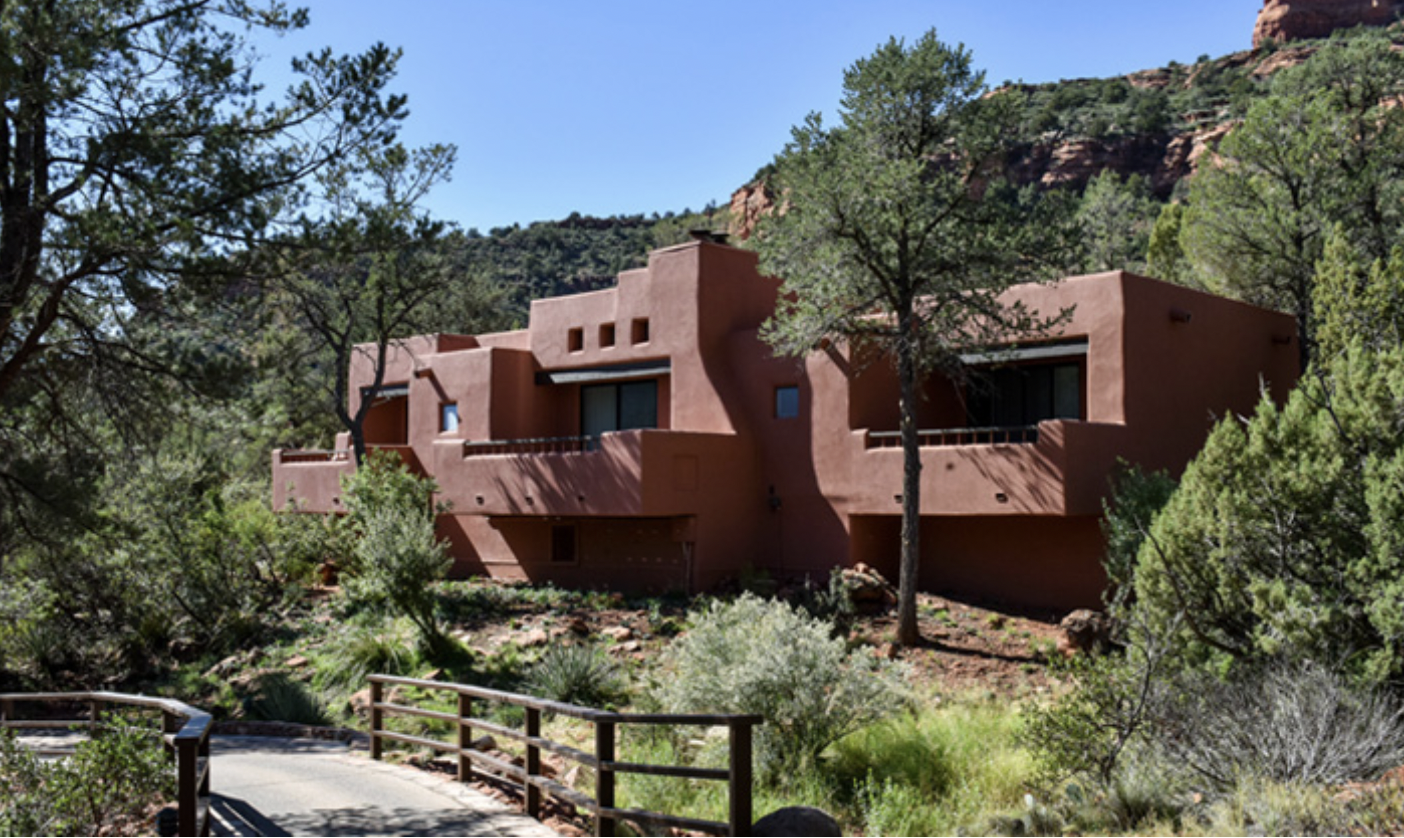
This is Sedona luxury at its finest.
Located in Boynton Canyon, Enchantment Resort is arguably the most iconic resort in the area. The views are breathtaking.
Best for:
- Executive retreats
- Leadership offsites
- Premium strategy retreats
Highlights include:
- Exceptional meeting spaces
- Luxury spa
- Fine dining
- Direct trail access
L’Auberge de Sedona
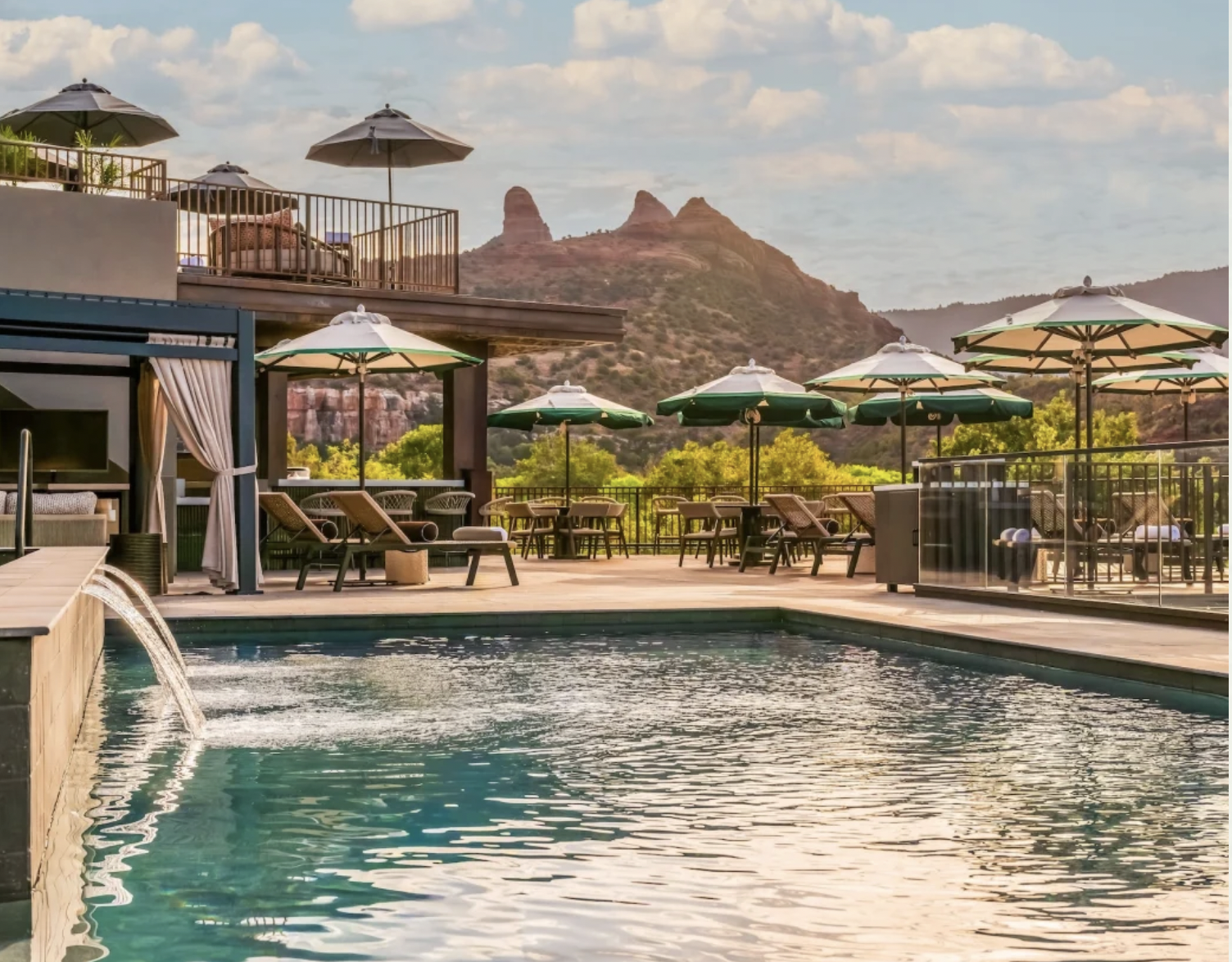
This property feels intimate, peaceful, and elevated.
Set along Oak Creek, it offers a quieter, more reflective experience.
Best for:
- Executive teams
- Creative workshops
- Wellness-focused retreats
Amara Resort and Spa
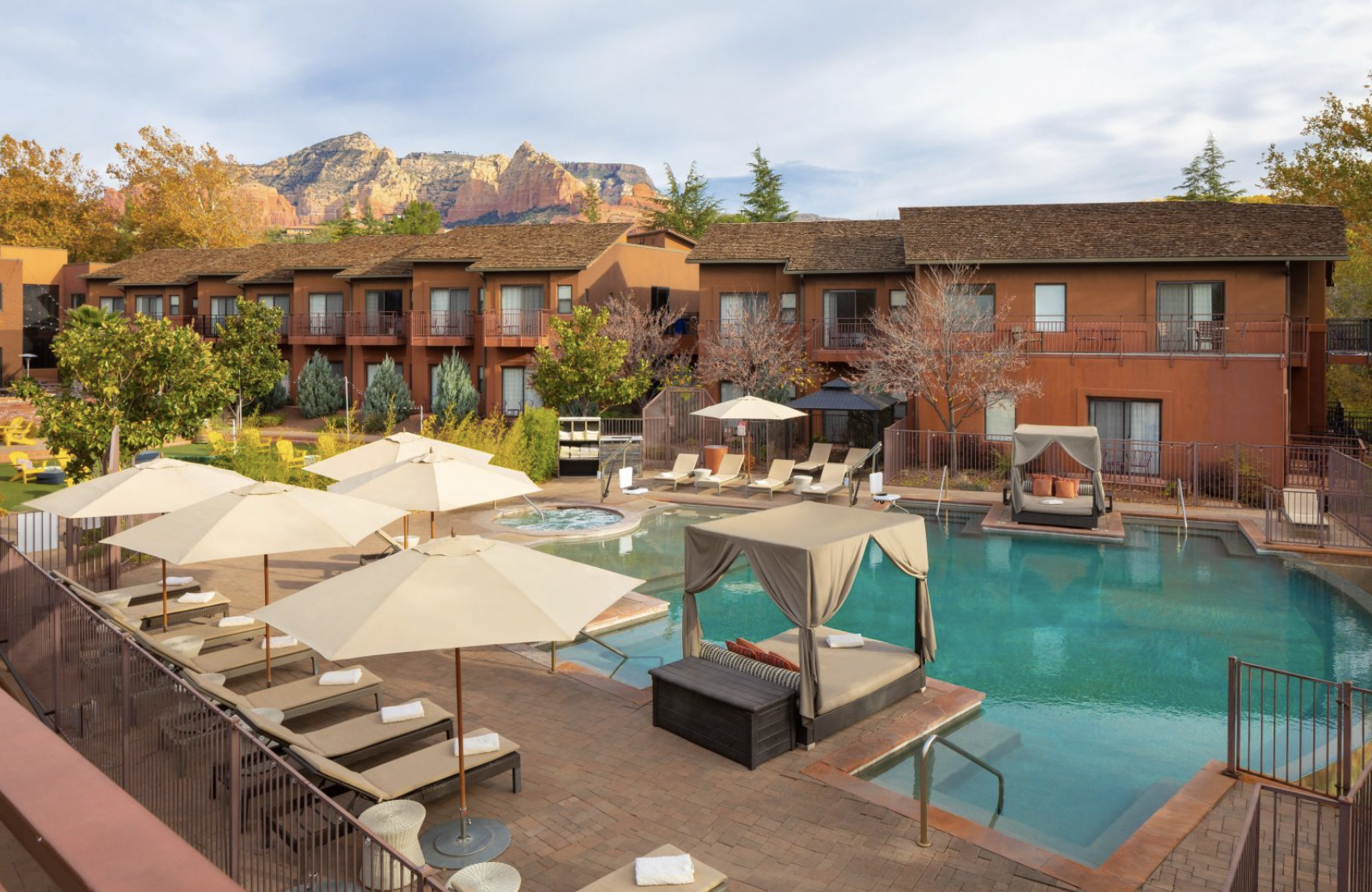
Stylish, modern, and centrally located.
This is a strong middle ground between luxury and accessibility.
Best for:
- Mid-sized teams
- Creative teams
- Remote team gatherings
Outbound Resort
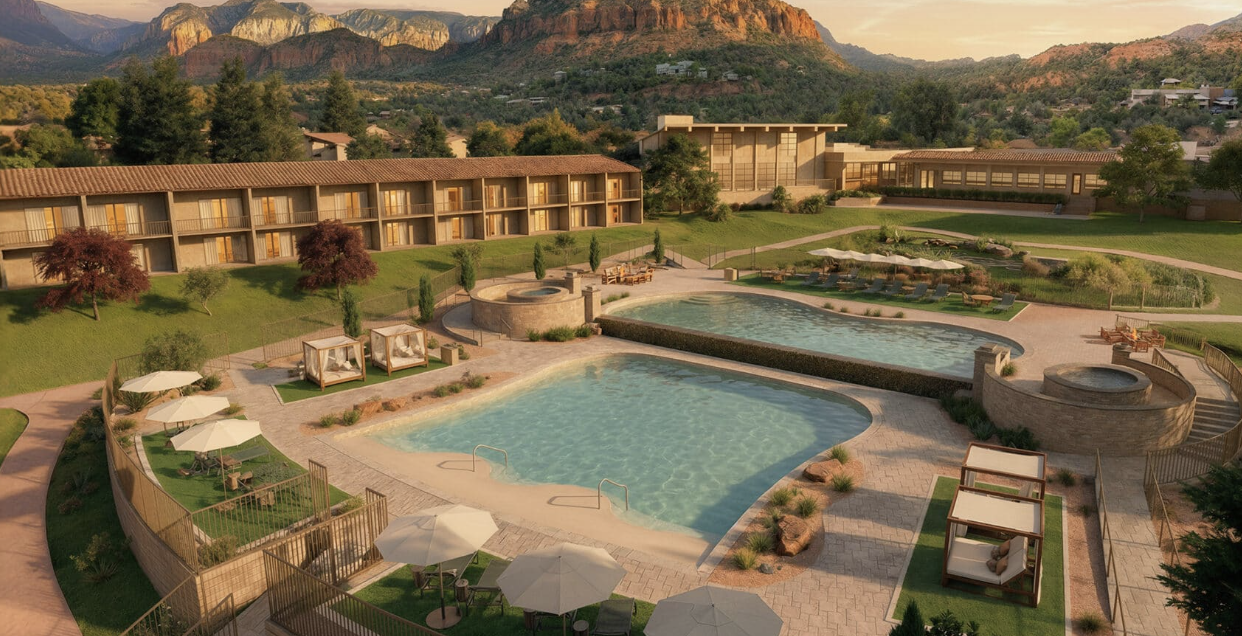
A more budget-conscious option that still works well for group retreats.
Good for larger teams with tighter budgets.
Step 4: Don’t Overschedule Meetings
This is one of the biggest retreat mistakes.
Teams spend thousands bringing everyone somewhere beautiful… only to lock themselves in conference rooms from morning to evening.
Why go to Sedona for that?
The destination should be part of the experience.
A strong retreat schedule balances:
- Meetings
- Breaks
- Free time
- Shared experiences
A helpful rule of thumb:
Try to avoid more than four to five hours of structured meetings per day.
Beyond that, energy drops and attention fades.
Sedona works best when people have room to breathe.
Step 5: Build Activities Around the Destination
Good retreat activities feel connected to the place.
Sedona offers far more than generic team-building exercises.
Here are activities that are actually worth considering.
Best Team Activities in Sedona
Guided Red Rock Hike
This is the classic Sedona experience.
And for good reason.
Popular trails include Bell Rock, Cathedral Rock, and Doe Mountain.
Hiking naturally encourages conversation and connection.
People open up differently when walking side by side outdoors.
Jeep Tours
A Sedona classic.
These are exciting, memorable, and accessible for mixed fitness levels.
Great for teams that want adventure without requiring physical endurance.
Mountain Biking
Perfect for active teams.
Sedona’s biking trails are world-class.
Stargazing
One of Sedona’s most underrated experiences.
The dark skies make for incredible astronomy sessions.
Bring in a guide with telescopes for a memorable evening activity.
Sound Bath or Meditation Session
Yes, it sounds very Sedona.
And yes, many teams end up loving it.
This works particularly well for:
- Burned-out teams
- Leadership groups
- Wellness retreats
Step 6: Plan Meals That Encourage Connection
Food has a bigger impact on retreat energy than people realize.
Avoid generic banquet-room meals whenever possible.
Instead, prioritize:
- Outdoor dining
- Family-style meals
- Chef-led experiences
- Memorable local restaurants
Great group dinner spots in Sedona include:
Mariposa Latin Inspired Grill
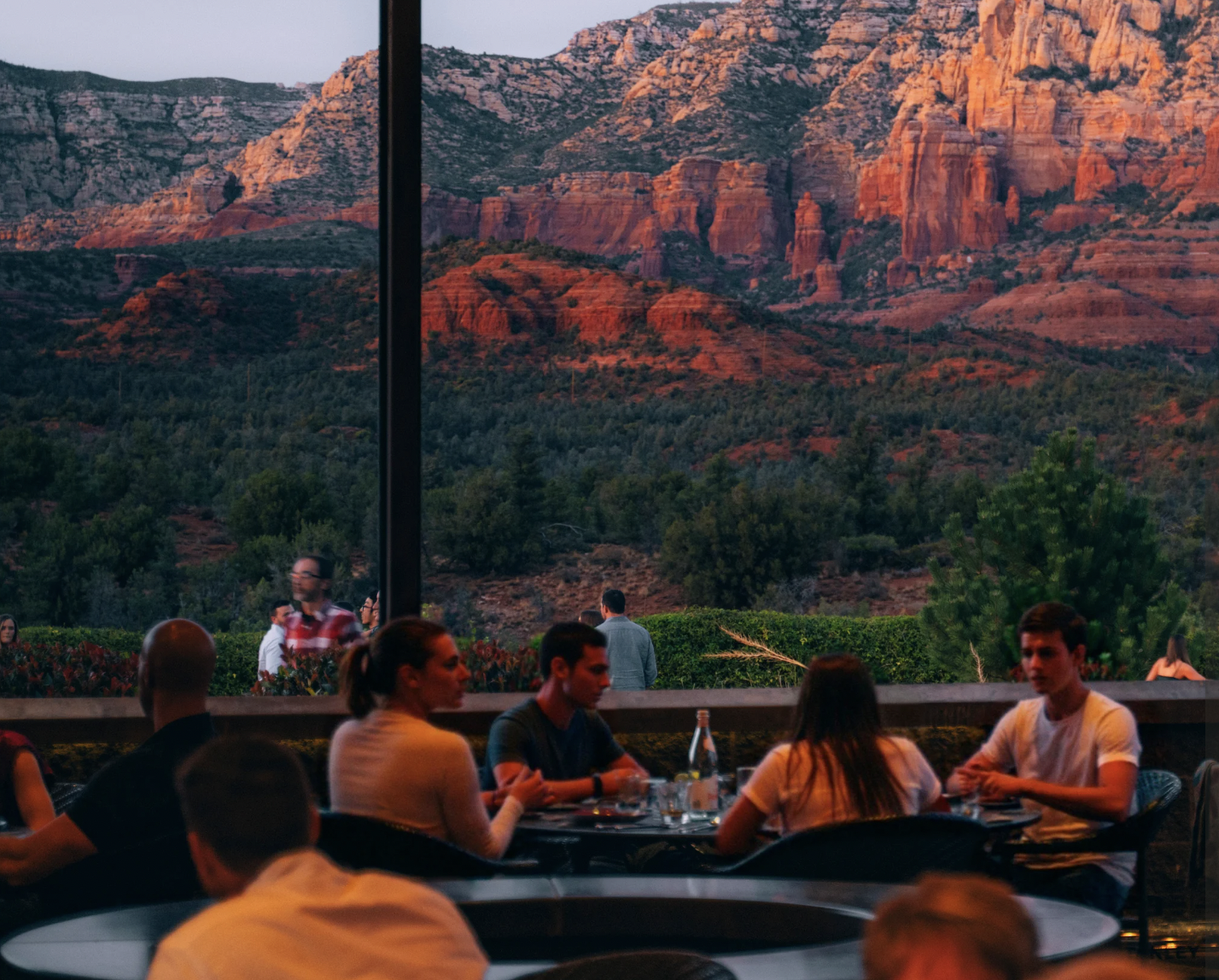
Known for stunning views and an elevated dining experience.
Perfect for a flagship dinner.
Elote Cafe

A local favorite for upscale Southwestern cuisine.
The Hudson

Stylish yet approachable.
Excellent for groups with diverse tastes.
Step 7: Leave Space for Unstructured Time
This is the secret ingredient of great retreats.
Some of the most valuable moments happen outside the official agenda.
Not during presentations.
Not during workshops.
But during:
- Coffee runs
- Walks between sessions
- Poolside conversations
- Late-night drinks
- Morning quiet time
Leave white space.
Resist the urge to optimize every minute.
Connection often happens in the margins.
Step 8: Think About Logistics Early
Sedona is stunning.
It’s also not the easiest destination to reach.
Most attendees will fly into Phoenix Sky Harbor International Airport, which is roughly a two-hour drive from Sedona.
That means transportation matters.
Plan for:
- Group shuttles
- Rental cars
- Arrival coordination
- Airport pickup windows
Questions to answer early:
- Will everyone arrive on the same day?
- Do you need welcome hospitality?
- Will attendees extend their stay?
Good logistics feel invisible.
Bad logistics dominate memories.
Sample 3-Day Sedona Corporate Retreat Itinerary
Day 1: Arrival and Connection
Afternoon:
- Check-in
- Welcome snacks
- Casual networking
Evening:
- Sunset cocktail hour
- Group dinner
- Leadership kickoff
Day 2: Strategy and Experience
Morning:
- Breakfast
- Strategy workshops
Midday:
- Group lunch
Afternoon:
- Jeep tour or guided hike
Evening:
- Dinner
- Fireside conversation
Day 3: Alignment and Wrap-Up
Morning:
- Reflection session
- Action planning
- Final takeaways
Afternoon:
- Departures
Common Mistakes to Avoid
Too Many Meetings
This is the biggest mistake.
Sedona isn’t meant to feel like a conference center.
Use the environment.
Choosing Activities That Exclude People
Not everyone wants extreme adventure.
Offer multiple options when possible.
No Free Time
Packed schedules leave little room for organic connection.
Over-Focusing on ROI
Not every valuable retreat outcome is measurable.
Sometimes the biggest win is trust.
Final Thoughts
A great corporate retreat in Sedona doesn’t need gimmicks.
Sedona already provides the magic.
Your job is simply to create the right structure around it.
That means:
- Clear goals
- Thoughtful pacing
- Great hospitality
- Memorable experiences
- Space for genuine connection
When done well, a Sedona retreat becomes more than an offsite.
It becomes a shared experience people reference months later.
The meeting notes may fade.
The feeling usually doesn’t.

